+8615820889696
 Info@cowint.com



Introduction: The cost of buying the wrong equipment far exceeds the cost of buying quality.
Against the backdrop of rapid DTF market growth, equipment suppliers are emerging everywhere. Faced with overwhelming choices, beginners often fall into the “cheap vs. good” dilemma. This article provides a comprehensive DTF equipment selection guide from four dimensions — market trends, equipment types, core specifications, and supplier selection — to help you make informed investment decisions in 2026.
1. Market Trends: Why Now Is the Best Time to Enter DTF
In 2025, the global DTF printing market was valued at USD 2.05 billion and is projected to reach USD 4.94 billion by 2031, growing at a robust CAGR of 15.8%. Asia-Pacific dominates the global market, driven by strong textile manufacturing bases in China, India, Vietnam, and South Korea, while North America leads in technological adoption, fueled by demand from e-commerce-driven apparel brands and print service providers.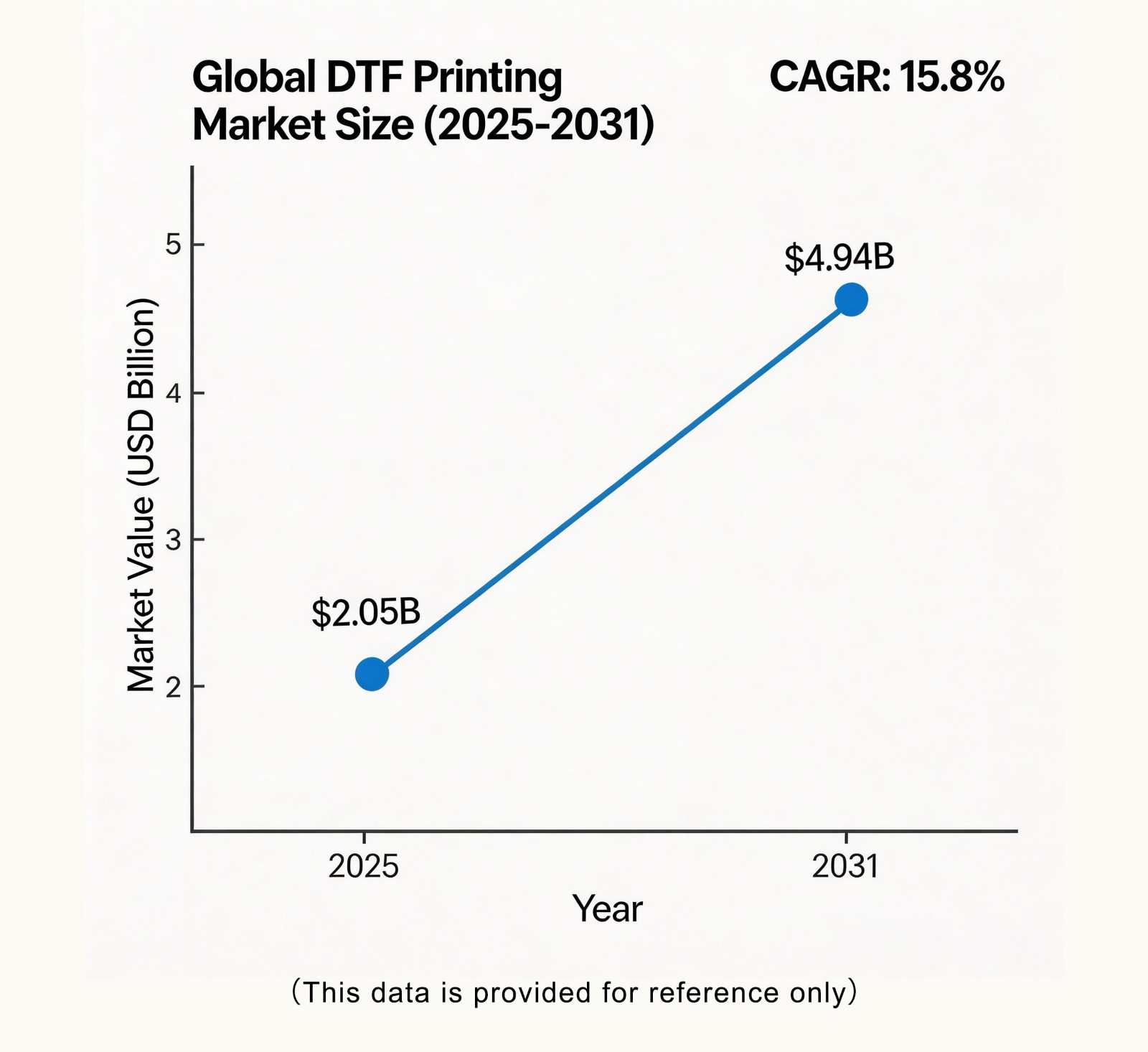
Several key trends are shaping the DTF market’s future:
Personalization and on-demand printing go mainstream. Apparel brands, online merchandisers, and influencers increasingly rely on on-demand printing to minimize inventory risk and respond quickly to fashion trends. DTF technology supports low minimum order quantities without compromising quality.
Automation and workflow optimization accelerate. Automated powder application systems, curing tunnels, and integrated RIP software are being widely adopted to increase throughput and reduce labor dependency. Mid-sized and industrial print service providers are increasingly investing in semi-automated DTF production lines.
Environmental awareness grows. Water-based, low-VOC inks and recyclable or biodegradable PET films are gaining real traction — a trend that cannot be ignored for 2025 and beyond.
2. Core Components of a DTF System
A complete DTF production system consists of the following core components:
1. DTF Printer — The Heart of the System
Classified by printhead technology: Entry-level typically uses Epson XP600 or similar; professional uses industrial printheads like Epson I3200 or Ricoh Gen5
Size selection: A4/A3 for small home-based operations; A2/A1 and roll-to-roll for commercial production
Number of printheads: Single-head for beginners; dual-head and triple-head models significantly increase production speed
2. Heat Press — Critical for Transfer Completion
Size selection: Flatbed heat presses for T-shirts and bags; roller or pneumatic types for continuous production
Temperature and pressure control precision directly affects transfer quality
3. Powder Shaker — Ensures Even Powder Distribution
Manual shakers for beginners and low volume; automatic systems for commercial production
Powder recovery features reduce material waste
4. Curing Unit — Activates Powder Adhesion
Oven-style curing for small batches; conveyor belt curing ovens for continuous production lines
5. RIP Software — The “Brain” Controlling Print Quality
Controls white ink layer generation, color management, and layout optimization
Licensed RIP software is a cost item to account for
3. Equipment Tiers: Which Level Is Right for You?
Entry-Level ($2,000 - $5,000 equipment investment)
Who it‘s for: Home-based operations, startups, Etsy sellers
Typical configuration: A3-size DTF printer + small heat press + manual/simple powder shaker
Output: 5-15 pieces per hour
Example models: Godora L1800 (~$2,199), Prestige A3 ($1,000-$1,300)
Pros: Low entry barrier, ideal for testing and learning; Cons: Slow speed, higher maintenance requirements
Mid-Range ($5,000 - $10,000 equipment investment)
Who it‘s for: Steadily operating small print businesses
Typical configuration: A3/A2 DTF printer + professional heat press + automatic powder shaker + oven
Output: 15-30 pieces per hour
Pros: Best value — sweet spot of speed and quality; Cons: Still requires some manual operation
Professional/Industrial ($10,000 - $25,000+ equipment investment)
Who it‘s for: Large print service providers, wholesale suppliers
Typical configuration: Industrial DTF printer (dual/triple head) + conveyor dryer + automatic powder system + professional RIP software
Output: 30-50+ pieces per hour
Pros: High throughput, low labor cost, consistent quality; Cons: High investment, requires specialized skills
4. Key Decision Factors for Equipment Selection
1. Printhead Technology
The printhead is the most critical component in a printer. Industrial printheads (e.g., Epson I3200) offer far superior lifespan and stability compared to entry-level heads (e.g., XP600). While the initial cost is higher, it proves more economical in the long run.
2. White Ink Circulation System
This feature distinguishes entry-level from professional equipment. An automatic white ink circulation system continuously agitates white ink to prevent pigment settling, significantly reducing the risk of printhead clogs. For users looking to minimize maintenance headaches, this is a worthwhile investment.
3. Supplier Technical Support
Equipment purchase is not a one-time transaction. When your printer fails, timely access to technical support and parts directly impacts your business continuity. Choose suppliers with clear warranty policies, local technical teams, or remote support capabilities. Many startups underestimate this — attracted by low prices, they find themselves stranded when equipment fails.
4. Consumable Availability and Cost
If a printer can only use expensive proprietary consumables from a single supplier, long-term operating costs will be high. Choose equipment compatible with mainstream consumables to reduce operating costs and maintain supply chain flexibility.
5. Production Space and Environmental Requirements
DTF printers require dedicated operating space. Also consider ventilation (ink fumes) and power requirements. Ensure your workspace meets the equipment‘s installation conditions.
5. The Golden Rule for Supplier Selection
Verify, don’t just trust. Before making a final decision, request equipment demonstrations or customer case studies. If possible, visit their factory or speak with existing customers.
Complete solutions beat piecemeal purchasing. Choosing a “one-stop” supplier that provides printers, film, powder, and ink ensures optimal compatibility across all components and simplifies troubleshooting. Our experience shows that in-house developed complete solutions deliver consistent quality, brilliant colors, and strong adhesion.
Think long-term partnership. Don’t focus only on initial price. Evaluate the supplier’s long-term capabilities in consumable supply, technical support, and product upgrades. A slightly more expensive but reliable supplier is often better value than a cheap but unstable one.
6. Looking Ahead to 2026: Innovations on the Horizon
In 2025-2026, the DTF industry will continue to see the following innovations:
UV DTF technology is emerging for hard surface transfers on non-textile substrates
Hybrid DTF-DTG systems combining the advantages of both technologies
AI-assisted quality control for automatic detection of print defects
More environmentally friendly materials, including water-based inks and recyclable PET films
These innovations mean the DTF industry is far from mature and continues to evolve rapidly. Choosing a supplier that continuously innovates ensures your equipment won‘t become obsolete within a few years.