+8615820889696
 Info@cowint.com



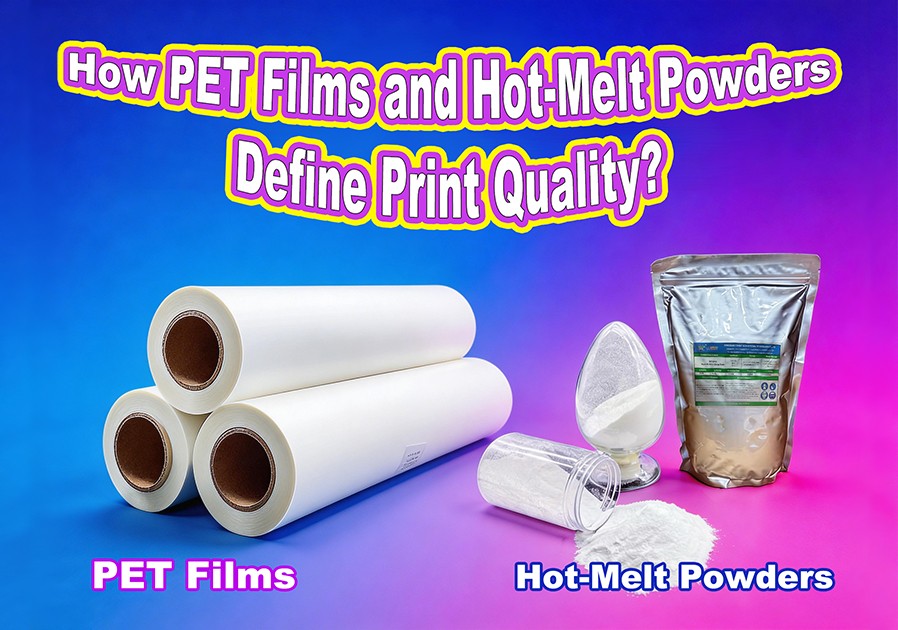
Introduction: Beneath the surface of DTF printing, materials are the true quality drivers.
When people talk about DTF printing, attention tends to focus on printers and inks. But any experienced DTF practitioner will tell you: the materials that truly determine final print quality are the “invisible” ones — PET films and hot-melt powders. This article dives deep into the science behind these core consumables, helping you understand why choosing the right film and powder is essential for achieving high-quality, durable prints.
1. PET Film: The Canvas of DTF Printing
The PET film is the first step in the DTF workflow — it carries the printed design and releases it onto the fabric during heat pressing. In 2025, breakthrough PET film technologies are redefining transfer quality.
Ultra-thin 12µ films are the new standard. Modern DTF printing now utilizes ultra-thin 12µ PET films with superior elasticity and adhesion properties, enabling crack-resistant transfers that withstand 50+ industrial washes. Thinner films mean less material consumption, lower environmental impact, and better detail reproduction.
Hot peel vs. cold peel. DTF films are classified by their peel timing. Hot-peel films can be peeled immediately after heat pressing, dramatically improving production efficiency. For instance, the PrintWant HMD01 Pro film is engineered for instant hot peeling, significantly speeding up production while maintaining excellent transfer efficiency. Cold-peel films require cooling before peeling and still have their place in specific applications.
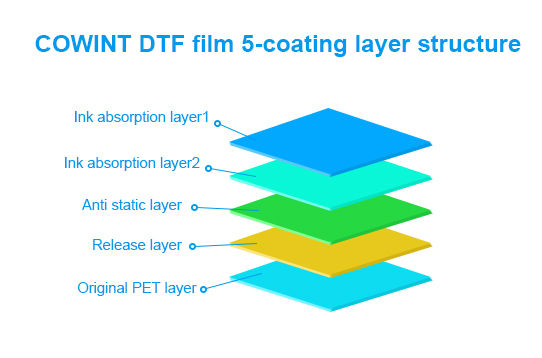
Coating technology advancements. High-quality DTF films feature double-layer coatings that ensure optimal ink adhesion and vibrant color reproduction. Water-based formulas enhance chemical stability, reducing ink bleeding and improving print clarity. Independent testing shows that certain premium PET films achieve 97% colorfastness under 50°C water immersion and deliver 300+ hours of UV resistance without fading.
Material compatibility is critical. Quality DTF films should work seamlessly with various brands of DTF inks, eliminating the need for expensive proprietary consumables — this is key to lowering the entry barrier for new businesses.
2. Hot-Melt Powder: The Invisible Adhesive
If the PET film is the canvas, hot-melt powder is the invisible adhesive that firmly bonds the print to the fabric. Without it, printed ink would simply sit on the fabric surface and wash away easily. Hot-melt powder directly affects stretchability, wash durability, texture, and overall print quality.
Base composition: Why TPU leads the way. DTF hot-melt powders are typically based on thermoplastic polyurethane (TPU), prized for its balance of flexibility, adhesion, and wash durability. TPU melts cleanly without burning and provides strong adhesion on various fabrics, including cotton and polyester blends.
Particle size: The science of coarse vs. fine. Particle size distribution is the key variable determining final print performance:
Fine Powder (60–100 μm): Distributes evenly, melts quickly, and forms thin adhesive layers. Ideal for detailed prints, small text, sharp lines, and fine artwork. Offers a soft finish — perfect for lightweight garments.
Medium Powder (70–170 μm): The most versatile option, offering an optimal balance of adhesion, softness, and durability. Recommended for cotton, mixed fabrics, hoodies, sportswear, and most general projects.
Coarse Powder (100–250 μm+): Creates thicker adhesive layers with deeper fiber penetration. Delivers the strongest grip and longest lifespan. Suited for thick, textured fabrics like denim, canvas, and workwear. Can create a stiffer feel and is not recommended for fine details.
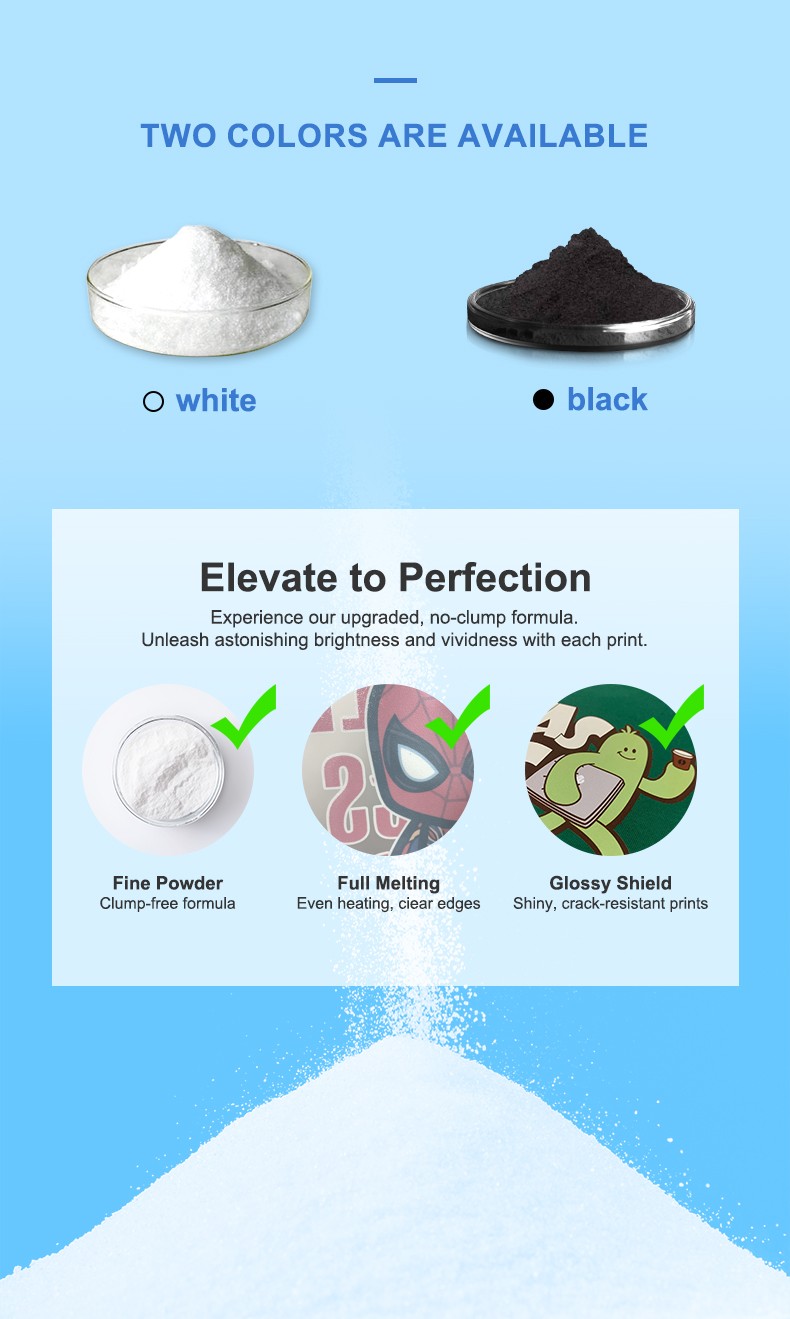
Color choice: White vs. black powder. White hot-melt powder is the standard choice for most applications. However, in 2025, black powder is gaining significant traction. Black powder features a specialized anti-sublimation function — it forms a dark barrier layer during heat pressing that prevents dye migration from dark fabrics into light-colored prints. This is critical for printing bright designs on dark polyester garments.
3. Material Synergy: The Perfect Match of Film, Powder, and Ink
The success of DTF printing is not the result of any single material — it comes from the synergy of film, ink, and powder working together. Quality film provides precise image holding and release. High-quality ink delivers vibrant, stable colors. Properly matched powder provides a strong yet flexible adhesive layer.
Industry testing shows that when these three elements are correctly matched, you can achieve: 97% colorfastness under 50°C water immersion, 300+ hours of UV resistance without fading, and intact prints after 50+ industrial washes.
However, inconsistent consumable quality remains a challenge in the DTF industry. Performance variations across different batches and suppliers can lead to adhesion failures, color inconsistency, and reduced wash durability. That‘s why choosing a reliable supplier that provides a complete range of compatible consumables is so important.
4. Practical Recommendations
For startups and home-based operations — Start with general-purpose medium powder and standard PET film. This combination covers most application scenarios while keeping initial inventory costs under control.
For sportswear and performance fabrics — Choose TPU-based powder with excellent elasticity (medium or fine) paired with high-elasticity PET film to ensure prints stretch naturally with the fabric without cracking.
For denim and workwear — Use coarse powder (100–200 μm) for deep fiber penetration, paired with high-durability film to ensure secure adhesion on heavy fabrics.
For bright prints on dark polyester — Always use black anti-sublimation powder to prevent dye migration from contaminating your prints.
Whatever you choose, prioritize quality and consistency — Source film, ink, and powder from the same supplier to ensure optimal compatibility between materials.