+8615820889696
 Info@cowint.com



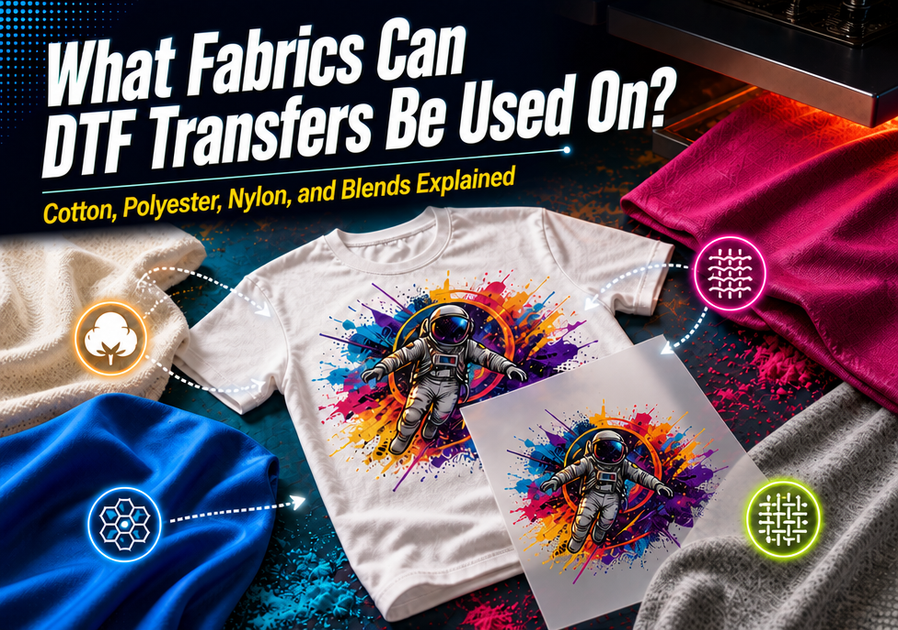
Overseas users often ask: “Can DTF be used on polyester?”, “Can I press DTF on nylon?”, and “Does DTF work on cotton blends?” One major advantage of DTF is fabric flexibility, but different fabrics still require different testing and pressing strategies. DTF can work on many materials, but not every material should be pressed with the same settings.
Cotton T-shirts
Cotton T-shirts are one of the most common DTF applications. Cotton handles heat relatively well and is widely used for brand apparel, event shirts, company uniforms, and everyday custom products. For cotton, the key steps are pre-pressing to remove moisture, keeping the transfer stable, and following the correct peel method for the film.
Heavy cotton and lightweight cotton absorb heat differently, so testing is still important before bulk production. Dark cotton garments also need a strong white underbase to keep colors bright.
Polyester and sportswear
Polyester is common in sportswear, uniforms, and performance apparel. DTF can be used on many polyester fabrics, but dye migration and heat sensitivity must be considered. Dark polyester may release dye under heat, which can affect the final print color.
When working with polyester, avoid simply increasing temperature. A more controlled approach is to use moderate heat, proper pressure, and tested dwell time. For high-value orders, make a sample first and check the color again after cooling.
Blended fabrics
Cotton-poly blends, stretch blends, and fleece are very common in custom apparel. The challenge is that different fibers react differently to heat and adhesive. Stretch fabrics also require flexibility. If the print area is large, comfort and stretch become more important.
Run stretch and wash tests on blended fabrics before taking bulk orders. The larger the design, the more important hand feel and flexibility become.
Nylon and waterproof fabrics
Nylon, waterproof jackets, and coated bags are more complex. They may have coatings, low surface energy, and limited heat tolerance. DTF may be possible on some nylon materials, but it requires careful low-temperature testing, consistent pressure, and a suitable adhesive system.
Waterproof coatings vary widely. Some coatings block adhesion, while others may warp or show press marks under heat. Do not run bulk production on coated fabrics without testing.
Hoodies, tote bags, and workwear
DTF is useful for hoodies, tote bags, and workwear because these products often require small batches, full-color graphics, and business customization. Thick fabrics need enough pressure. Zippers, seams, pockets, and raised areas can create uneven pressure. A pressing pillow or pad may help level the print area.
Fabric testing checklist
For every new fabric, test:
Heat tolerance
Color change, shine marks, or deformation after pressing
Edge adhesion
Lifting after cooling
Stretch behavior
Wash stability
Need for low-temperature powder or special settings
Final answer
DTF works on a wide range of fabrics, but professional production requires fabric-specific testing. Cotton, polyester, blends, nylon, hoodies, bags, and workwear may all need different press strategies. The responsible process is to identify the fabric first, understand the use case, and then confirm settings through testing.